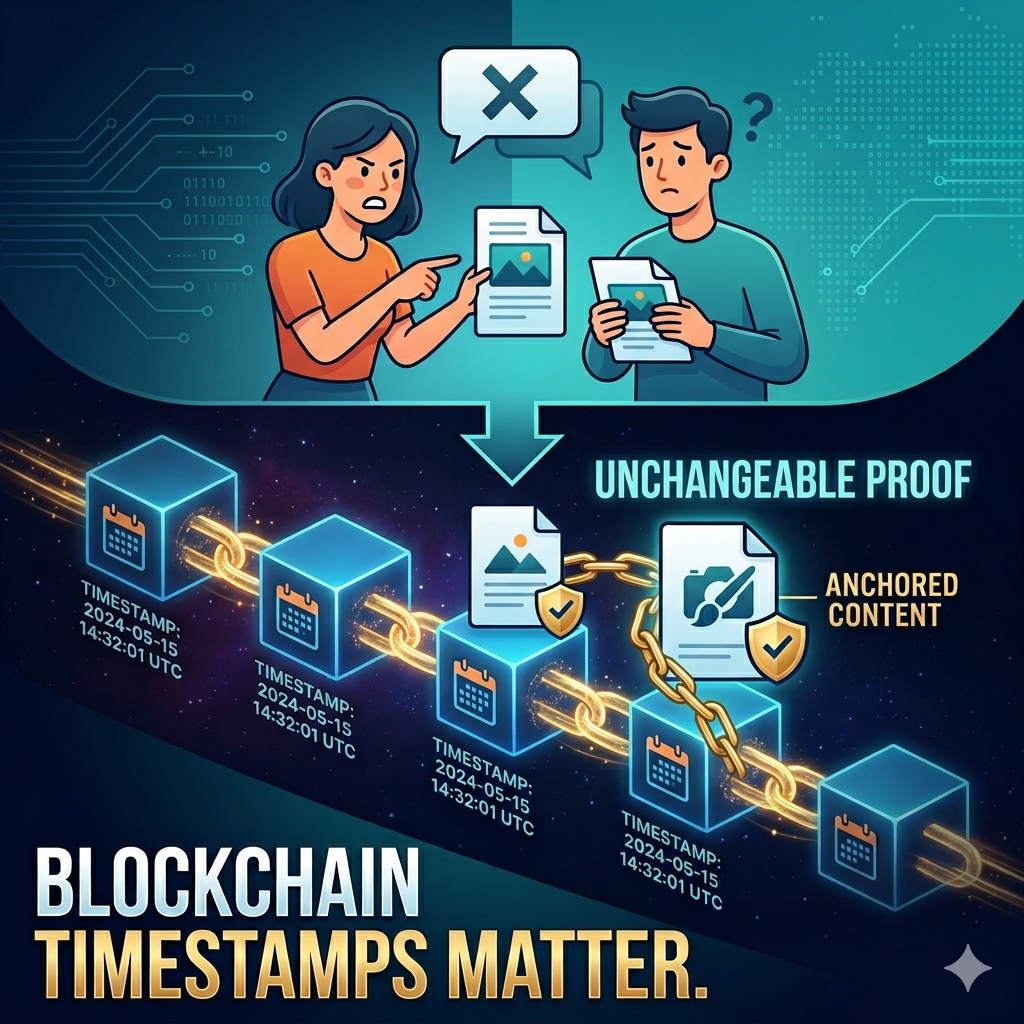
A musician posted on r/copyright this week with a familiar problem: "someone stole my lyrics from my hard drive but I lost the hard drive and can't really prove ownership."
The responses were predictable. Register with the Copyright Office. Use a notary. Keep better records. But nobody mentioned the actual costs and timelines involved. When you need to prove creation date, the method you choose depends on three factors: speed, money, and legal weight.
Here's what each option actually costs.
Copyright Office Registration: $65 and a 3-6 Month Wait
The US Copyright Office charges $65 for online registration. Sounds reasonable until you factor in the timeline.
Current processing times run 3-6 months for online applications. Paper applications take 6-10 months. That's fine for published books or finished albums, but useless for works in progress.
The bigger issue is scope. Copyright registration protects the specific version you submit. If you register a rough demo and later develop it into a full song, the registration only covers the original demo. Each significant revision needs its own filing.
For a photographer shooting 200 images per wedding, registering every shot would cost $13,000 in fees alone. The Copyright Office allows group registration for certain types of work, but the requirements are strict and the process is complex.
Copyright registration gives you the strongest legal protection. You can sue for statutory damages up to $150,000 per work, plus attorney's fees. But it's backwards-looking proof. You're proving you had the work when you filed, not when you actually created it.
Notary Services: $5-15 Per Document, But Physical Presence Required
Notaries charge $5-15 per document in most states. Some charge more for complex documents or rush services.
The process seems simple: print your creative work, bring it to a notary, they witness you sign a statement that you created it on a specific date. The notary's seal and signature create a sworn record.
But notaries only verify that you signed the document in their presence. They don't examine the content or verify when you actually created the work. You could theoretically create something today, backdate it to last month, and have a notary witness your signature claiming the backdated creation.
The bigger practical problem is volume. A novelist finishing a chapter every week would spend $260-780 per year on notary fees. A photographer shooting multiple events would spend thousands annually.
Notarized documents carry legal weight in court, but they're only as credible as your sworn statement. If opposing counsel can show you had motive to backdate creation, the notary seal doesn't help much.
Blockchain Anchoring: Near-Free and Instant, But Different Legal Status
Blockchain anchoring costs vary by platform and transaction volume. ProofAnchor charges per anchor but transactions often cost under a dollar.
The process is different. Instead of submitting the work itself, you submit a SHA-256 hash of the file. The hash gets written to the Polygon blockchain within minutes. The original file never leaves your device.
Speed is the key advantage. You can anchor a file the moment you finish it. A photographer can anchor wedding photos before leaving the venue. A songwriter can anchor a voice memo the moment inspiration strikes.
The limitation is legal precedent. Blockchain timestamps are newer than copyright registration or notarized documents. Some courts have accepted them as evidence, but the track record isn't as established.
The technical verification is actually stronger than traditional methods. Anyone can verify a blockchain timestamp independently using the transaction hash. You can't backdate entries or modify records after the fact. The Polygon blockchain is public and immutable.
When Each Method Makes Sense
The decision depends on what you're protecting and why.
Use copyright registration when: You have finished, polished work that won't change significantly. You're willing to wait months for processing. You want the strongest possible legal protection for enforcement.
Use a notary when: You need sworn documentation quickly. You're working with physical documents or contracts. You need something local courts will definitely recognize.
Use blockchain anchoring when: You're creating frequently and need to establish creation dates for works in progress. You need instant proof that scales across hundreds or thousands of files. You want independently verifiable records that can't be altered.
Many creators use multiple methods. Register your most important finished works with the Copyright Office. Anchor everything else to establish creation dates. Use notaries for specific legal documents or contracts.
The best protection strategy isn't picking one method. It's understanding what each actually costs and when each makes sense for your creative workflow.